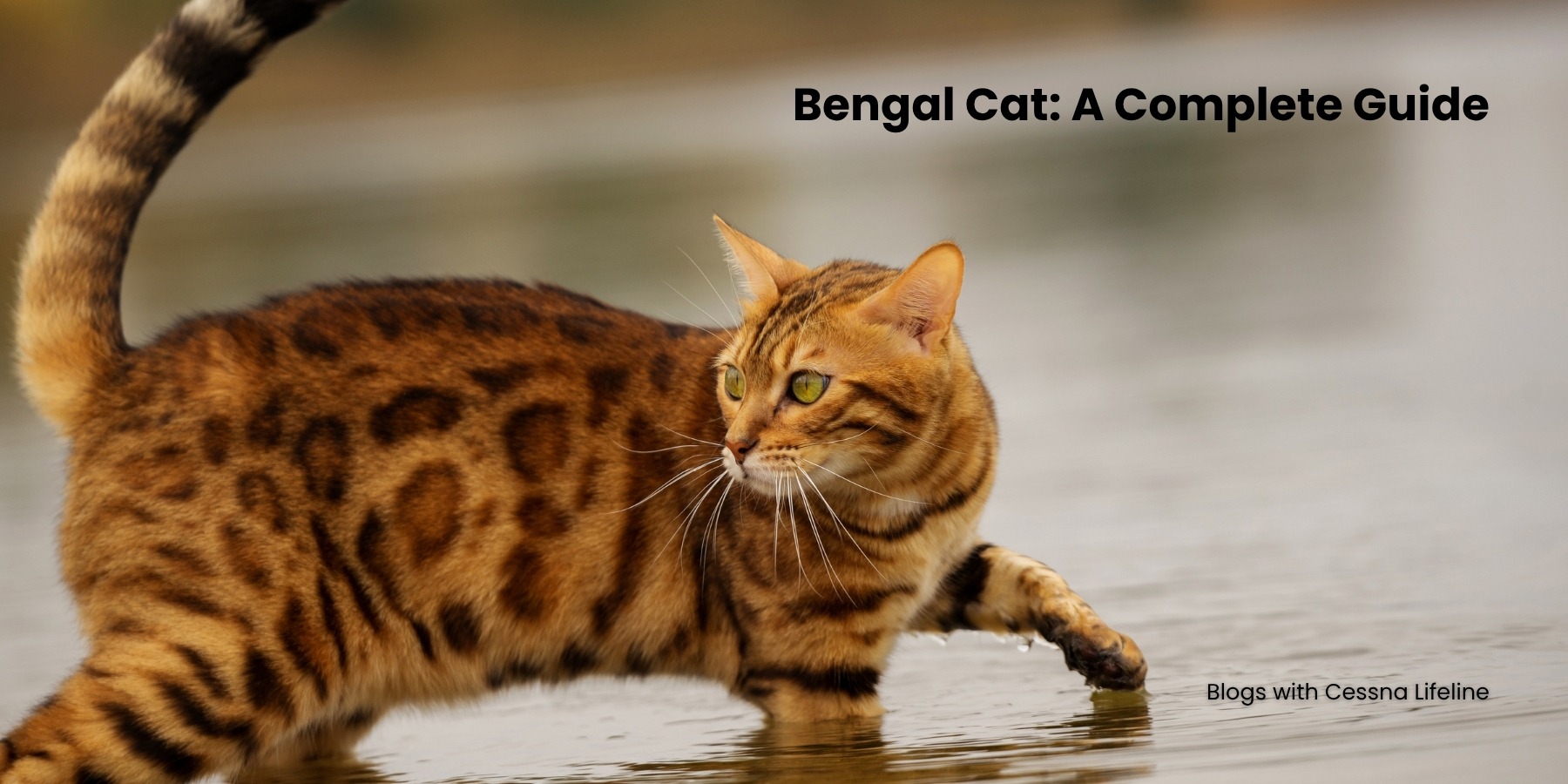
If you're enchanted by the wild look of a domestic feline, the Bengal cat might be your dream pet. Commonly referred to as the Bengal tiger cat for its extraordinary markings of rosettes and athletic build, this breed combines exotic beauty with a domestic companion. This article will explore the history, traits, care, and costs associated with the beautiful Bengal cats- we will even point you to trusted resources like Cessna Pet Store for cat toys, cat food, cat biscuits, and more!
Origins & History of Bengal Cat
The Bengal cat is a hybrid breed created by crossing a domestic cat with the Asian leopard cat, producing a cat that retains a wild aesthetic while behaving like a household companion. Early deliberate breeding efforts began in the late 20th century (notably by Jean Mill) to stabilize a line that was healthy, social, and suitable as pets.
Appearance & Personality of Bengal Cat
One of the hallmark traits of a Bengal is its coat: either spotted (rosettes) or marbled in pattern, often with a glittering or shimmering effect in sunlight. Their coat colors may range from brown tabby, silver, snow (snow/lynx point), and more.
Bengal cats range from medium to large in size. They are muscular and agile, and they are playful and energetic until late into their life.
In terms of their personality, the Bengal cat is highly intelligent, curious, social, and interactive. They enjoy playtime, problem-solving toys, climbing, and exploration. Because of their energy levels, they demand more attention and environmental enrichment than many typical cat breeds.
Health & Lifespan of Bengal Cat
On average, Bengal cats will enjoy a lifespan of 12 to 16 years. Bengal cats, in general, are healthy but are prone to some specific genetic issues:
- Hypertrophic cardiomyopathy (HCM) (a heart condition)
- Progressive retinal atrophy or other eye conditions
- Patellar luxation (knee problems)
- Gastrointestinal sensitivities or digestive upset
Every cat, including Bengal cats, should get regular check-ups with their vet, screening when breeding, and preventative care.
Care, Diet & Grooming of Bengal Cat
- Grooming: Fortunately, Bengals’ short, dense coats are relatively low-maintenance. Brushing several times per week will help keep loose hair off and allow oils from the skin to be distributed through the coat for shine. Regular nail trimming, gentle ear cleaning, and dental care are also significant.
Also consider spa & grooming tools for nail trimming, bathing, etc., from Cessna.
- Diet & Nutrition: Bengals do well on high-quality cat food that is protein-rich and low in fillers. As obligate carnivores, their diet must supply essential nutrients (e.g., taurine). Using puzzle feeders or interactive feeding toys can help satisfy their mental stimulation needs.
If you're shopping for Bengal cat food or cat biscuits, check out what Cessna Pet Store offers.
- Toys & Enrichment: To keep your Bengal mentally and physically engaged, supply a variety of Bengal cat toys, climbing towers, scratching posts, puzzle feeders, and rotating playthings.
Bengal Cat Price & Choosing a Bengal Cattery
While they might not be one of the most important considerations of potential owners, the price of a Bengal cat is something to think about. The price of a Bengal cat will depend on a variety of factors, including a cat's generation, pedigree, coat quality, health certifications, and the reputation of the breeder.
In many markets, Bengal kittens from reputable breeders may cost several hundred to a few thousand dollars or their equivalent. Show-quality Bengals command higher prices. When looking for a Bengal cattery, ensure the cattery is ethical and provides health testing, socialization, and documentation.
Local buyers in India should strongly consider purchasing from a local cattery or an established breeder. Doing so helps minimize import/shipping costs, legal complications, and health concerns. It is important to know your legalities, regulations, as a Bengal kitten is a hybrid.
Final Thoughts
Bengal cats are a unique blend of wild grace and domestic companionship. They are not a low-maintenance pet: they need mental stimulation, space, good nutrition, and health care. But if you are prepared to commit, they can be loving, delightful, and an endless source of fun.
For expert advice, feel free to contact Cessna Pet Store.
FAQ
Q1. What is a Bengal cattery?
A Bengal cattery is a breeder facility that specializes in raising Bengal cats. A good cattery offers health certificates, proper socialization, transparent pedigree records, and ethical breeding practices.
Q2. Are Bengal cats like tigers?
While often called a Bengal tiger cat due to their spotted or rosette coat, Bengals are not wild tigers. They are domestic cats with a wild appearance. They retain domestic cat temperament (if bred responsibly).
Q3. How long do Bengal cats live?
Typically between 12 and 16 years, if well cared for.
Q4. Do Bengal cats get along with children or other pets?
Yes—when appropriately socialized, Bengals usually interact well with children and other pets. Their high energy means playtime should be supervised, especially with young children.
Q5. How much grooming do Bengal cats need?
Because their coat is short and dense, grooming is relatively simple. Brush them a few times a week. Regular nail trims, dental care, and ear checks should be part of the routine.


 German
 Arabic